跳转到主要内容

Memorizing Fretboard

Memorizing Fretboard

Memorizing Fretboard

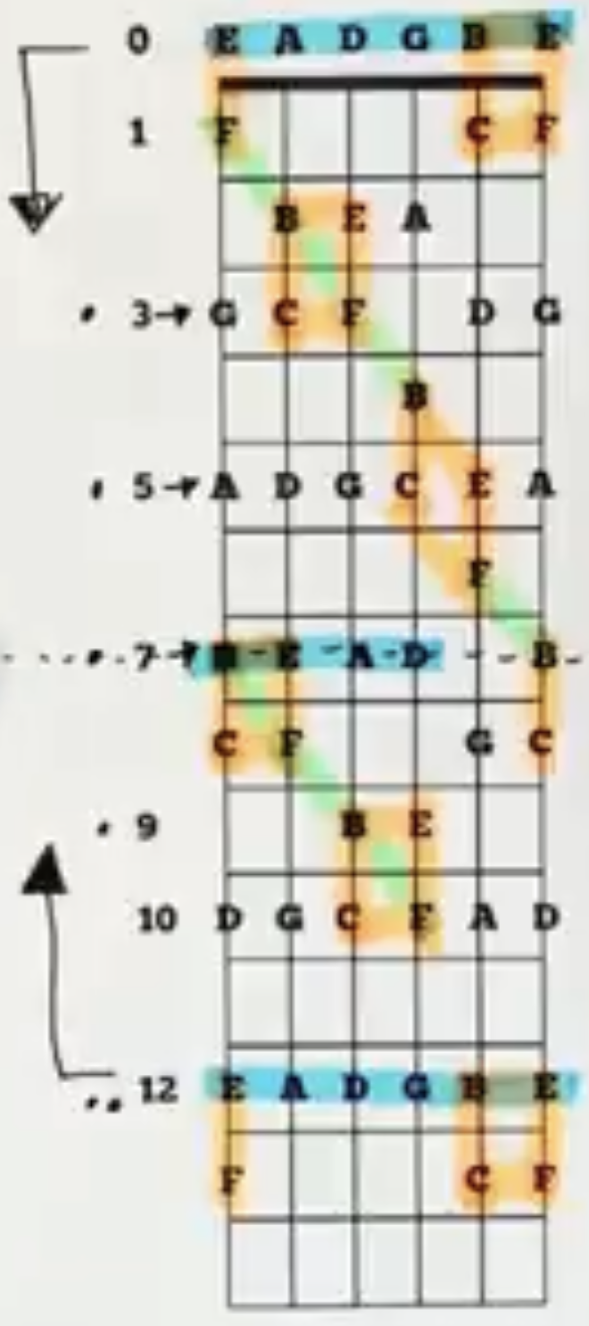
Empty-String Pattern​

EADGBe

  • High E and low E strings are equivalent in notes.
  • The first 12 frets (0–11) repeat identically from the 12th fret onward (12–23).

Circle of Fifths Patterns​

  • Blue: Follows the circle of fifths — C → F → Bb → Eb → Ab → Db → Gb → B → E → A → D → G.
    • Since the B string is tuned differently (a major third from the G string instead of a fourth), you need to shift patterns up by one fret on the B string to stay in key. The same applies to the low E in some patterns.
  • Orange: Highlights the BC and EF half steps.
  • Green: Diagonal pattern for FBFB.

What do "major third" and "fourth" mean?

  • Most guitar strings are tuned in fourths: E → A → D → G (perfect fourth intervals).
    • Example: E → F → Gb → G → A (4 semitones).
  • B string exception: The interval from G to B is a major third — G → Ab → A → B (3 semitones).

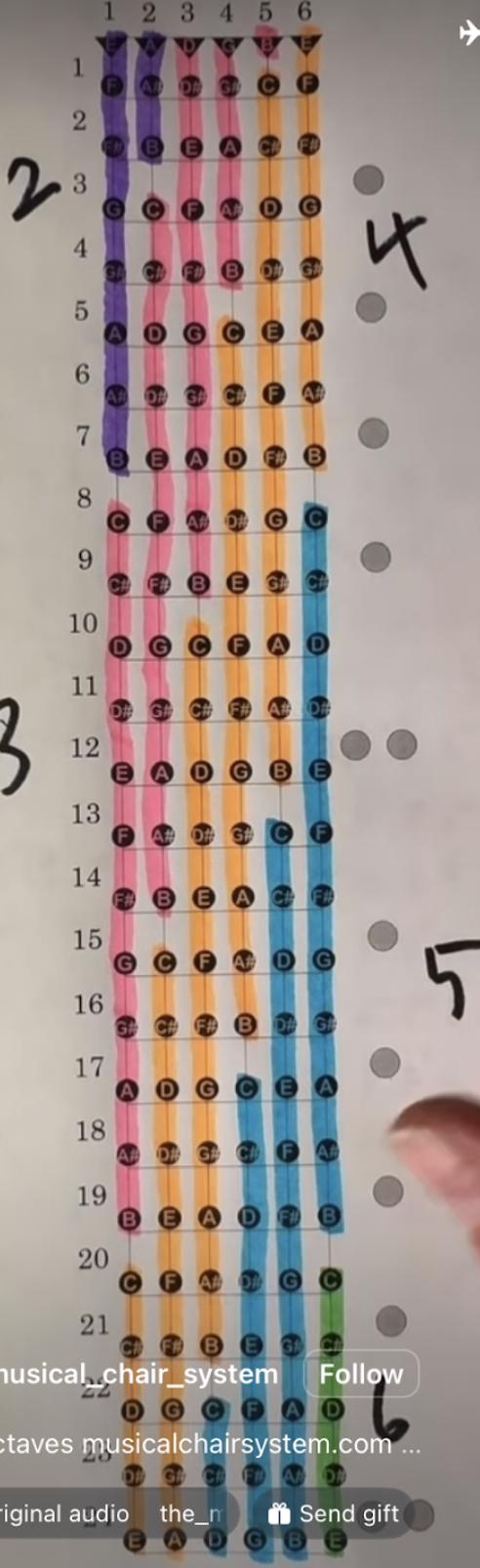
From E2 to E6​

On a 24-fret guitar, the pitch range spans from E2 to E6.

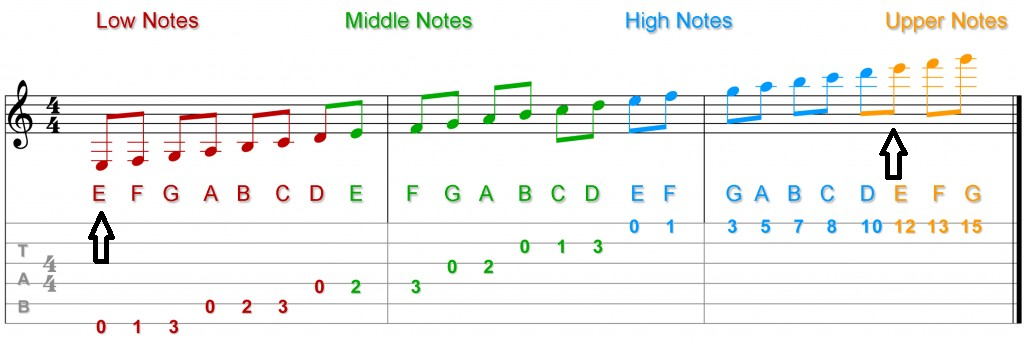
The treble clef staff typically covers a range from approximately E4 to F5 for piano, but for guitar, the notation spans E3 to F4, written an octave higher than it sounds.

Interval Structure​

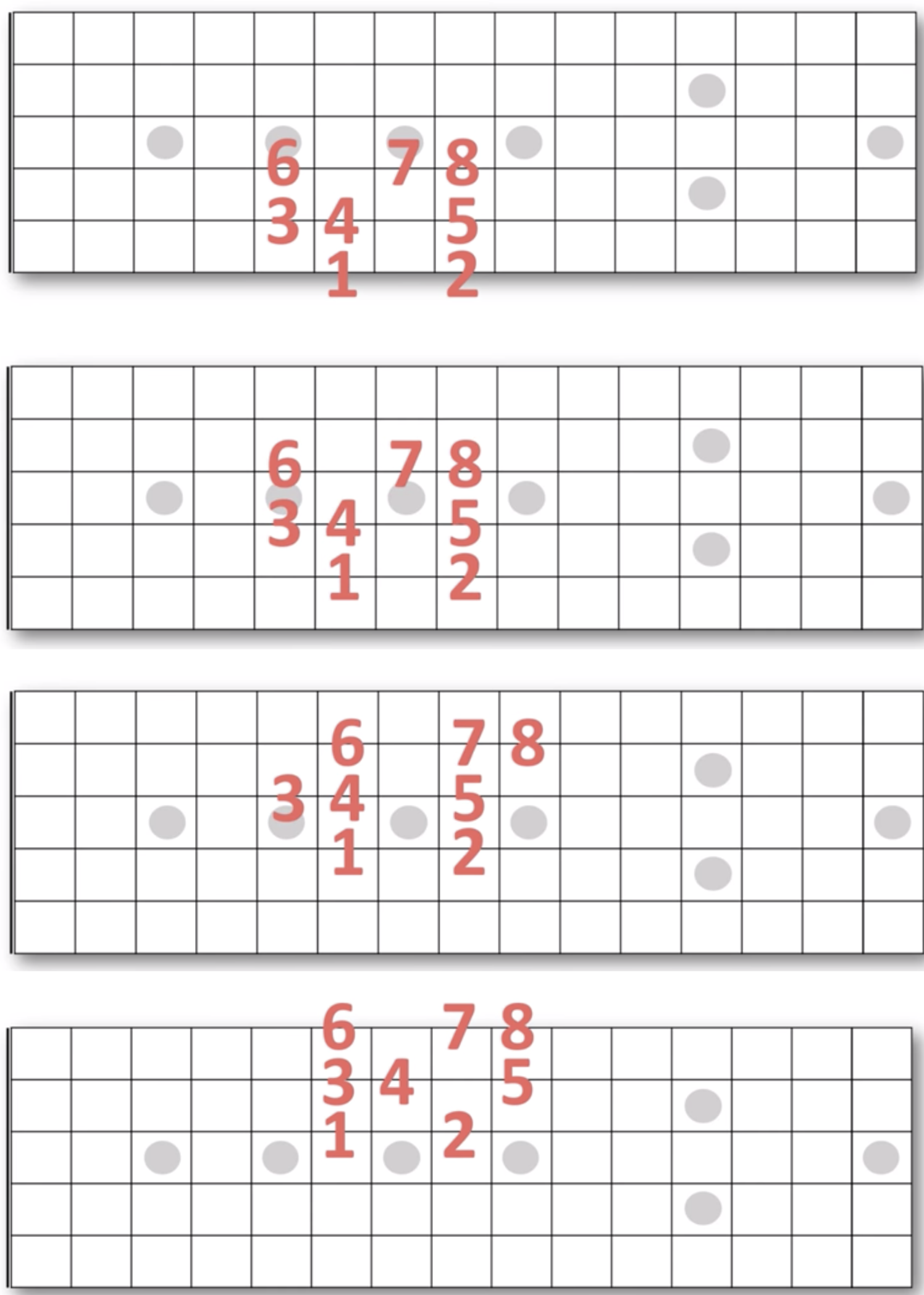
Assuming E(1st) A(2nd) D(3rd) G(4th) B(5th) E(6th),

From left to right:

  • On the 1st to 4th strings, skipping one string, the same note appears two frets higher.
    • Example: In a C5 power chord, the root note on the 5th string (C) is mirrored two frets higher on the 3rd string.
  • On the B and low E strings, the same note appears three frets higher when skipping a string.

From right to left:

  • For the 5th (B) and 6th (low E) strings, skipping two strings and shifting by two frets yields the same note.
  • For the 4th (G) string, skipping two strings and shifting by three frets yields the same note.

All Pitches on All Strings​

Practice finding a given note on all strings, either systematically or by following the circle of fifths.

保持联系,关注我获取更多内容